Thursday, September 29, 2016

the herbs around the grass

When it comes to plants, I usually look up to (for) trees. And thus I had come with the idea of focusing on them. Particularly in pastures, the presence of trees and their relation to the agroecosystem has always been intriguing. So called silvopastoral systems aim to combine the best of two worlds, lots of grassy forage for livestock and a broad array of multi-purpose trees. As a fan of agroforestry (putting trees on farms), I'm biased towards the latter. But I'm just realizing that the non-woody vegetation is just as fascinating. It's quite evident that some 'pastures', particularly those that are managed in a certain way (more on that later), are teeming with plant diversity. And one wonders about the role of these herbs and shrubs, if they are also foraged and are they nutritious, if they compete with grasses and/or they enhance their quality, if bees appreciate a flowery field and if farmers do too, if different roots below mean better things above...plant diveristy is important...right now it feels to be so.


pasture plant diversity

Monday, September 19, 2016

host a spider

We came across this striking plant of the spurge family (Euphorbiaceae), locally known as "lechita" because of the milky sap it contains. One farmer mentioned it's foraged by cattle, although I wonder because its latex-like sap probably tastes pretty bad and could be somewhat toxic.

Euphorbia heterophylla

There was more to it: the flower structure seemed to be a favourite hunting ground for this spider.


And it was quite bussy.

Wednesday, August 31, 2016

the first hike

Our introduction to La Sepultura started with a great hike.

Got as far as we could with the truck at "La Envidia" ranch and then started walking. Just a few minutes into the hike and coffee fields were all around us. Fortunately, coffee plants were looking good despite past damage caused by coffee rust (later we learned that some producers were applying preventive fungicides and planting resistant varieties).

We were looking into the canopy when we noticed that many Heliocarpus trees had their leaves quite perforated. These guys appear to be the culprits:

Zats
Huge gregarious caterpillars from a moth species (Sarturniidae ?). In some parts of Chiapas they call them 'zats' (in the indigenous Tzotzil language) and they say they're delicious :) Culinary curiosities aside, it would be interesting to find out how their frass (droppings) contributes to soil fertility, because there was lots of it on the ground, and many of these infested trees grow in coffee fields. Zats flavoured coffee is what I'm thinking.

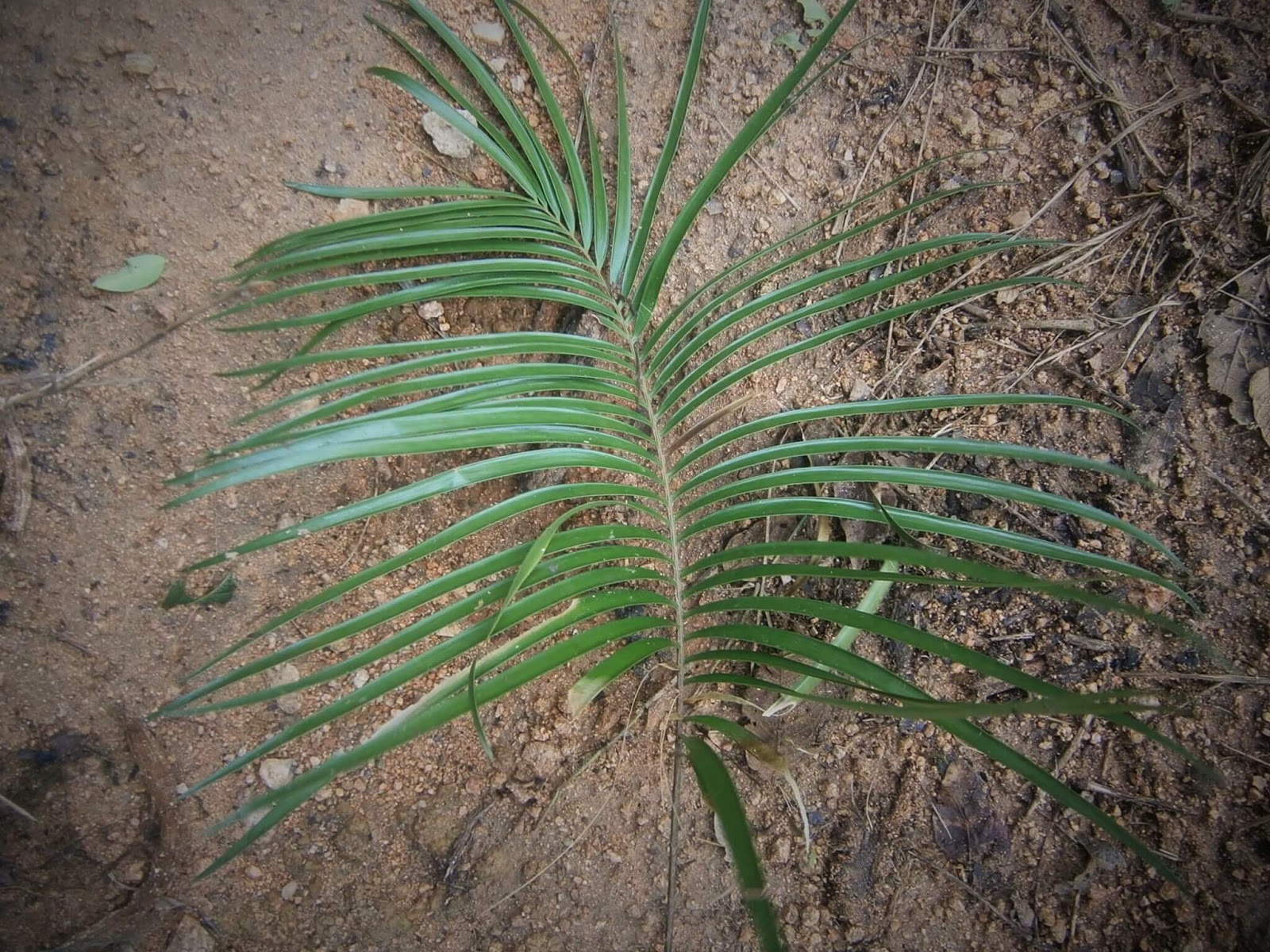
Another thing that I found amazing is that farmers that had cleared their coffee fields (from understory plants and weeds) had spared Ceratozamia (Zamiaceae) individuals. This group of cycads is endangered, and so it's encouraging to see these conscious practices in the field. I'm interested to find out how this came to be.

Ceratozamia leaf


Soon enough we entered the forest and hiked our way up to around 1,650 meters a.s.l. Nature abundance! Trees, plants, butterflies, fungi...

fig tree and a Luis hand

Parasitic plant Helosis mexicana


The way down was a bit slower than the way up, we had to cross some abandoned fields with thick vegetation. Our guide made good use of his machete and everyone was in good spirits.

The ECOSUR-Forefront team


the only way through (is striking a pose)

finally out of the forest

What a wonderful introduction to our research site! and dinner at Doña Chonita's was just as great.

Saturday, August 27, 2016

First visit to La Sepultura!!

One week in La Sepultura!

Our field site is very green right now!! It´s been raining and maize and bean production are doing good according to people from Los Angeles... Ejido Los Angeles here at the Biosphere Reserve La Sepultura, I´m not talking about the city in California!!! :P

Well... we can also brag about California (another ejido) where resine extraction from pine is taking place...

We had a glance at many land uses here: coffee farms, cattle and pastures, maize and beans...

It´s a very complex and dynamic matrix and last week we met some producers that are interested in conserving nature and providing for their families... and we´ll have the opportunity to work with them!!

Can we take a peak at your field sites??

Abrazo!


Monday, August 15, 2016

arriving

Just arrived to ECOSUR, my host institution in Mexico, and basically the base from which I'll do my fieldwork for the next few years. San Cristóbal de las Casas is now my home, and this room from where I'm writting my new 'office'. What better moment to start a blog, which I hope will be shared by PhDs and postdocs involved in the FOREFRONT program.

Only a month ago I was cycling through Wageningen University when this sign caught my attention. Nothing out of the ordinary for a big building from a big institution, but curiously, asides from not having noticed it until the last days of my six-month stay here, it reflects my/our research topic, that of ecosystem services and the 'delivery of goods'.

Cheers,
welcome all!